


Surface Plates & Tables
Scroll Down to view products.
Surface plates are precision-engineered, perfectly flat platforms used as a horizontal reference for dimensional inspection and measurement. They form the foundation for activities such as quality control, toolmaking, gauging, marking out, and component layout. Common materials include granite, cast iron, metal alloys, and glass.
Acting as a primary reference standard, surface plates are essential for maintaining accuracy in manufacturing and inspection processes. They are produced to defined flatness grades (typically Grade 00 through Grade 3), ensuring suitability for varying levels of precision work. Industries across the UK—including aerospace, automotive, defence, and general engineering—depend on these plates to verify tolerances, detect distortion, and confirm the dimensional integrity of machined components.
Calibration and Maintenance
To preserve measurement accuracy, surface plates should be calibrated regularly—usually every 6 to 12 months, depending on usage. High-traffic areas are more prone to wear, so consistent inspection helps identify issues such as surface damage, distortion, or uneven wear. Any irregularity can compromise measurement reliability and lead to defective parts passing inspection.
Key Material Characteristics
An effective surface plate material should offer:
High rigidity and structural stability
Strong resistance to wear and corrosion
Minimal risk of distortion or twisting over time
Common Surface Plate Materials
Granite Surface Plates
Granite is highly valued for its corrosion resistance and dimensional stability. It is largely unaffected by temperature fluctuations, allowing it to maintain flatness over extended periods. Granite is also harder than cast iron, which contributes to its wear resistance and longevity.
Best Practices for Use
Regularly verify flatness to ensure continued accuracy
Clean the surface thoroughly before use to prevent contamination
Cover the plate when not in use to protect against damage
Distribute work evenly across the surface to avoid uneven wear
Apply a protective layer where appropriate to reduce corrosion risk
Applications of Surface Plates
Surface plates provide a stable, wear-resistant reference plane for precision tasks. They are widely used for measuring heights, checking flatness, and marking out components with high accuracy. Granite variants, in particular, offer excellent thermal stability due to their low coefficient of expansion, making them ideal for environments where temperature variation could otherwise affect measurement results.
Showing all 8 results
-
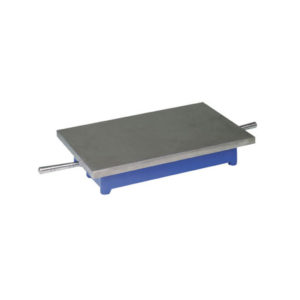
Cast Iron Surface Plate
£584.98 View Product This product has multiple variants. The options may be chosen on the product page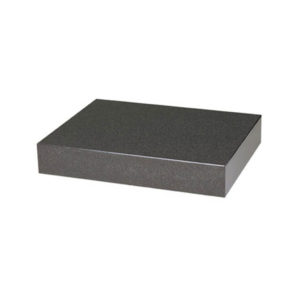
Granite Surface Plate (Grade 1) 300 x 300 x 100mm Thick
£156.29 View Product This product has multiple variants. The options may be chosen on the product pageGranite Surface Plate (Grade 1) 450×300 x100mm Thick
£295.40 View Product This product has multiple variants. The options may be chosen on the product pageGranite Surface Plate (Grade 1) 450×450 x100mm Thick
£356.06 View Product This product has multiple variants. The options may be chosen on the product pageGranite Surface Plate (Grade 1) 600 x 450 x 100mm Thick
£457.21 View Product This product has multiple variants. The options may be chosen on the product pageGranite Surface Plate (Grade 1) 600 x 600 x 100mm Thick
£556.51 View Product This product has multiple variants. The options may be chosen on the product page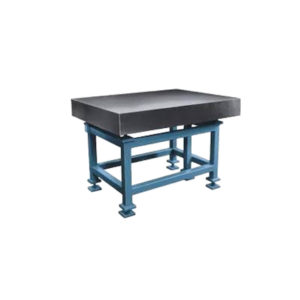
Granite Surface Table Complete With Adjustable Stand
From £1,071.32 View Product This product has multiple variants. The options may be chosen on the product pageGranite Surface Table with Adjustable Stand – Inspection Grade Surface Plate BS 817 | Precision Measurement Table UK
From £1,071.32 View Product This product has multiple variants. The options may be chosen on the product page